Post Harvest: There are several cherry processing methods out there i.e Washed process, Natural (Dry), Pulped Natural/ Honey, Carbonic Maceration, etc but at the moment we are currently using Fully-Washed and Natural processing. However, it is safe to say that, we are ready and willing to experiment and embrace other processing methods, as we progress. However, it is safe to say that, we are ready and willing to experiment and embrace other processing methods, as we progress .i.e Washed process, Natural (Dry), Pulped Natural/ Honey, Carbonic Maceration, etc but at the moment we are currently using Fully-Washed and Natural processing. However, it is safe to say that, we are ready and willing to experiment and embrace other processing methods, as we progress.
- Fully Washed Process:This is the most preferred mode of processing in Kenya. After the floaters have been fully separated, picked cherries are de-pulped within 5 hours, to ensure quality and consistency. The de-pulped beans are then put in clean tanks to dry-ferment for 12 hours, during which time, the mucilage will break down from the beans. The beans are then washed and placed in tanks, where they will remain immersed for approximately 24 – 48 hours (soaking) under careful supervision. This process is renowned for a brighter and cleaner bean that has enhanced fruit and acidic favour.
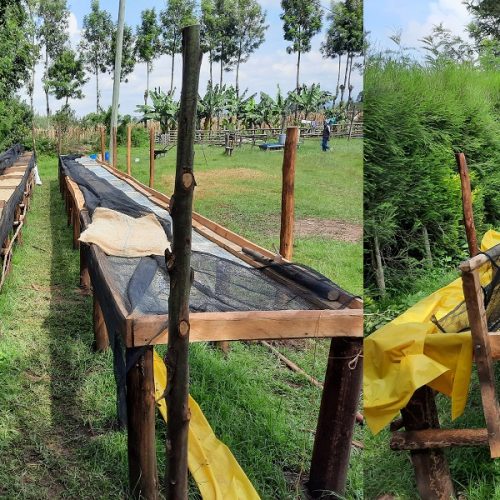
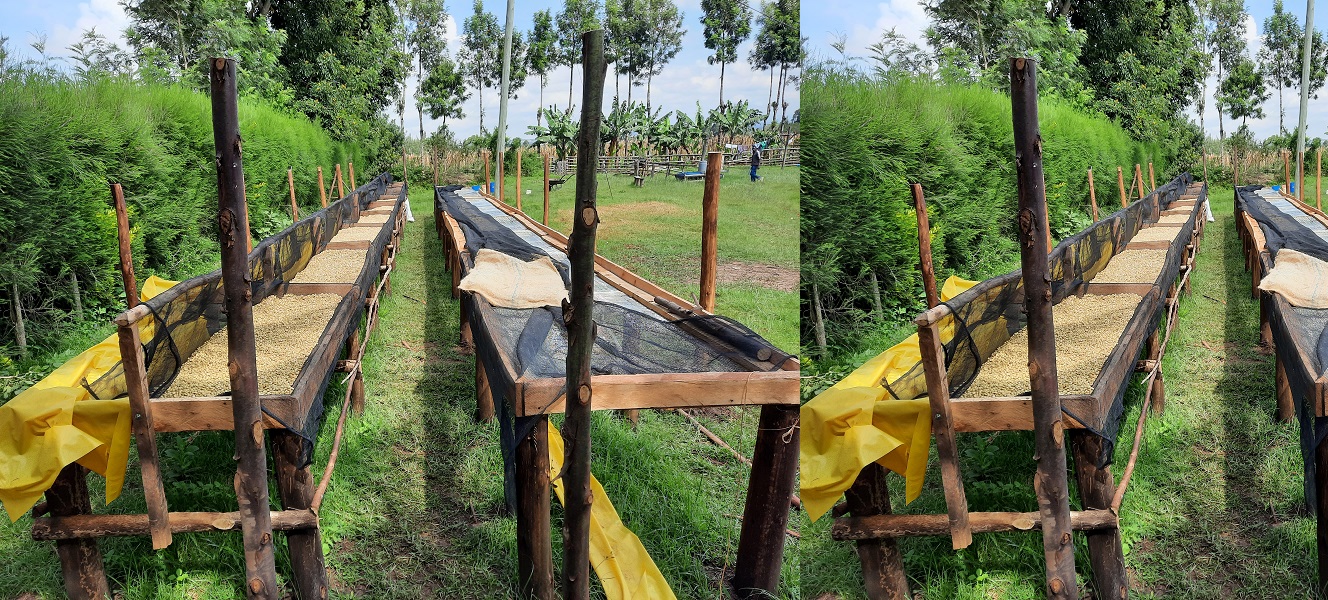
Drying: Washed beans are graded and sun-dried on the drying beds under shade or Greenhouse. At this point, the temperature, moisture and humidity are constantly monitored. After about 12-15 days, the beans are dry and only have the optimal residual moisture of 11 to 13 per cent.
- Natural (Dry)Processing:This ancient and original processing method is the most cost-effective because it requires little or no water. After harvesting, the cherries are evenly spread on the raised beds to dry in the sun. A meticulously processed natural is bound to provide some intense yet smooth flavour. We did only a few bags natural during our first harvest in October 2021 and the taste was great, with an explosion of flavours. The greatest challenge to this process, however, lies in the lack of control during fermentation.
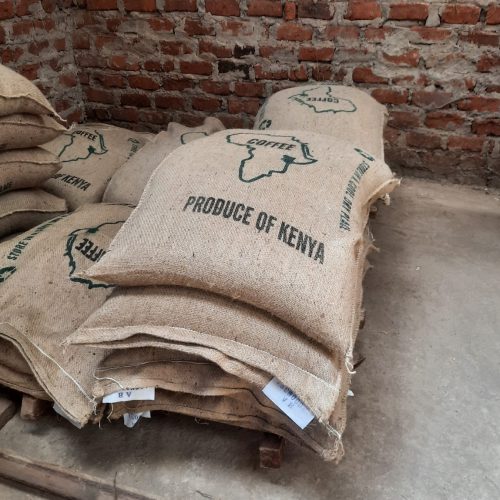
Post-drying: Parchment coffee is packed into jute sacks and transported to the millers where it is hulled, graded and finally packaged as Green coffee.
Milling: We currently contract the services of a local commercial milling company, but we are focused on doing it ourselves, within the farm soon.
Grading: The Kenyan grading scale is based on the Size, Shape and the Overall quality of the bean i.e
AA, AB, PB, C, E. TT, T